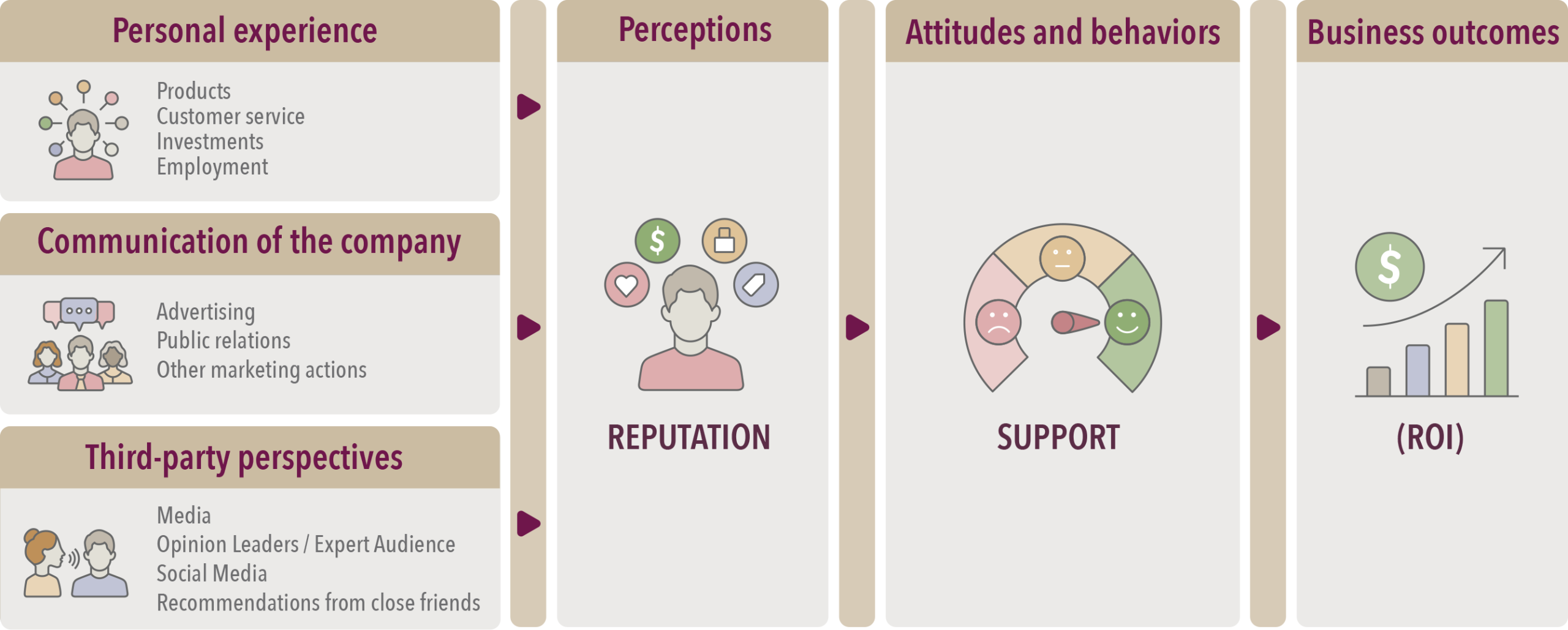
is the emotional bond stakeholders develop with a company or organization based on their perceptions, judgments, and overall evaluations of it.
It is reflected in feelings such as admiration, respect, and trust, or the opposite when reputation is weak or damaged. These feelings shape the attitudes and behaviors that matter most to business success: buying products, choosing services, applying for jobs, investing, recommending the company, or giving it the benefit of the doubt in difficult times.
We call today’s environment the reputation economy: a context in which stakeholder perceptions and emotions have a direct impact on business performance through the decisions people make every day.
This connection between reputation, stakeholder support, and business results can be measured, analyzed, and managed.
Corporate reputation is built through three main channels: direct stakeholder experience, company communication, and third-party opinions.
Reputation management means building positive stakeholder sentiment through the right combination of internal action and effective communication. In some cases, this requires meaningful organizational change. In others, it means ensuring that reality is clearly and credibly understood.
Nations, like companies, also have reputations. Country reputation influences whether international audiences want to visit, invest, study, work, collaborate, or buy products from a particular country. This has tangible consequences for tourism, foreign direct investment, exports, and global influence.
The most admired countries also gain greater soft power in international institutions and in their relationships with other nations. For this reason, managing country reputation should be a strategic priority for governments.
At the same time, a nation’s reputation shapes how its companies and brands are perceived abroad. It can provide a valuable endorsement or become a barrier that reduces attractiveness and competitiveness.
That is why organizations should understand whether their country of origin is strengthening or weakening their own positioning and reputation.
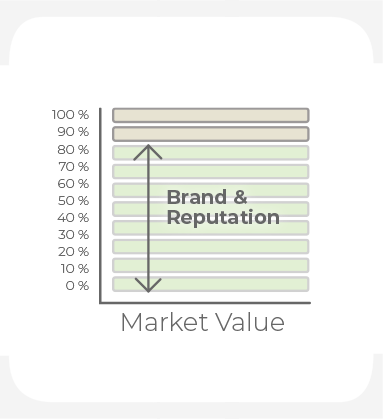
In many sectors, intangible assets such as brand and reputation account for between 20% and 80% of an organization’s total market value.