

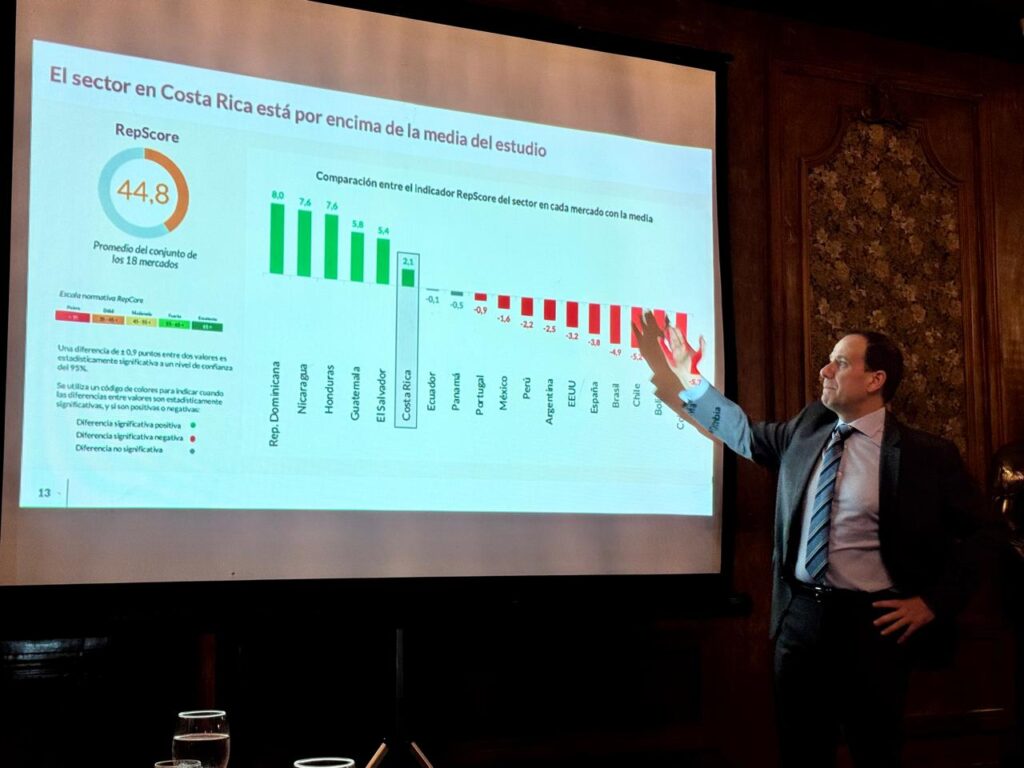
- According to the study prepared by Reputation Lab, the reputation indicator of the Costa Rican banking sector is moderate at 46.9 points, 2.1 points above the average.
- The reputation of the banking sector is better in countries with lower levels of banking penetration. The Dominican Republic, Nicaragua and Honduras are the countries where banks have the best reputation, while they are perceived as the worst in Colombia, Bolivia and Chile. Costa Rica ranks sixth out of 18.
- Rising prices, insecurity, unemployment and political and business corruption are ranked as the main problems in the eyes of Costa Ricans.
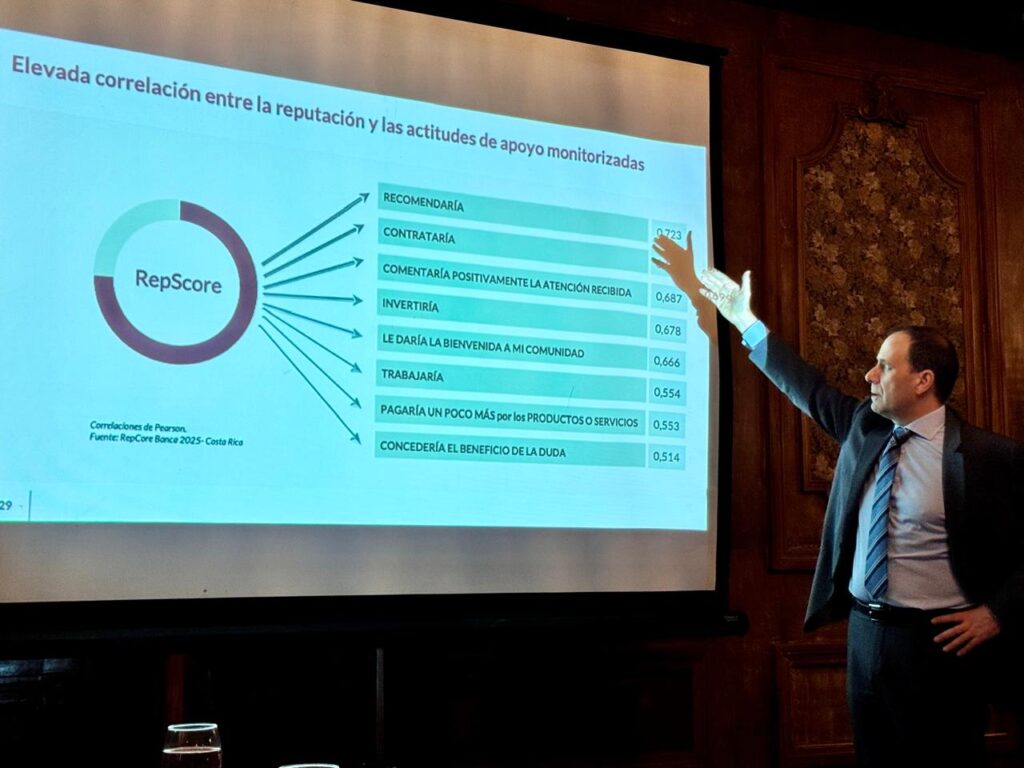
- According to the results of the study, variables related to ESG criteria explain almost half of the banking sector's reputation, demonstrating that positive social impact and ethical behavior are particularly relevant societal demands for the sector.
According to the RepCore® Banking 2025 study, the average reputation indicator of the Costa Rican banking sector is moderate at 46.9 points, 2.1 points above the Ibero-American average, which this year extends its study to 18 countries after including the USA, Brazil and Ecuador.
Specifically, the results show that it is in countries with lower levels of banking penetration that the sector achieves its highest average reputation index. On the contrary, it is in the more mature markets, with more demanding consumers, where its reputation is weaker because it is not able to meet the expectations of its customers. Thus, the Dominican Republic, Nicaragua and Honduras are the countries where banks have the best reputation, while they are perceived as the worst in Colombia, Bolivia and Chile. Costa Rica, where the top ten banks are analyzed, ranks sixth out of the 18 countries analyzed.
When consumers in the different countries in the study were asked about the role of banks in society, their importance in financing individuals and companies was identified, with specific mentions of access to housing or support for entrepreneurship, serving as a cog in the economy by connecting savings and investment, supporting the country's development, contributing to financial education and supporting the most disadvantaged through their social work. However, consumers' assessment of the degree to which this role is fulfilled is, in general terms, low, although with significant differences between countries. In those countries where the perception of compliance is higher, the sector enjoys a stronger reputation.
In the specific case of Costa Rica, rising prices, insecurity, unemployment and political and business corruption are the main problems in the eyes of its citizens.
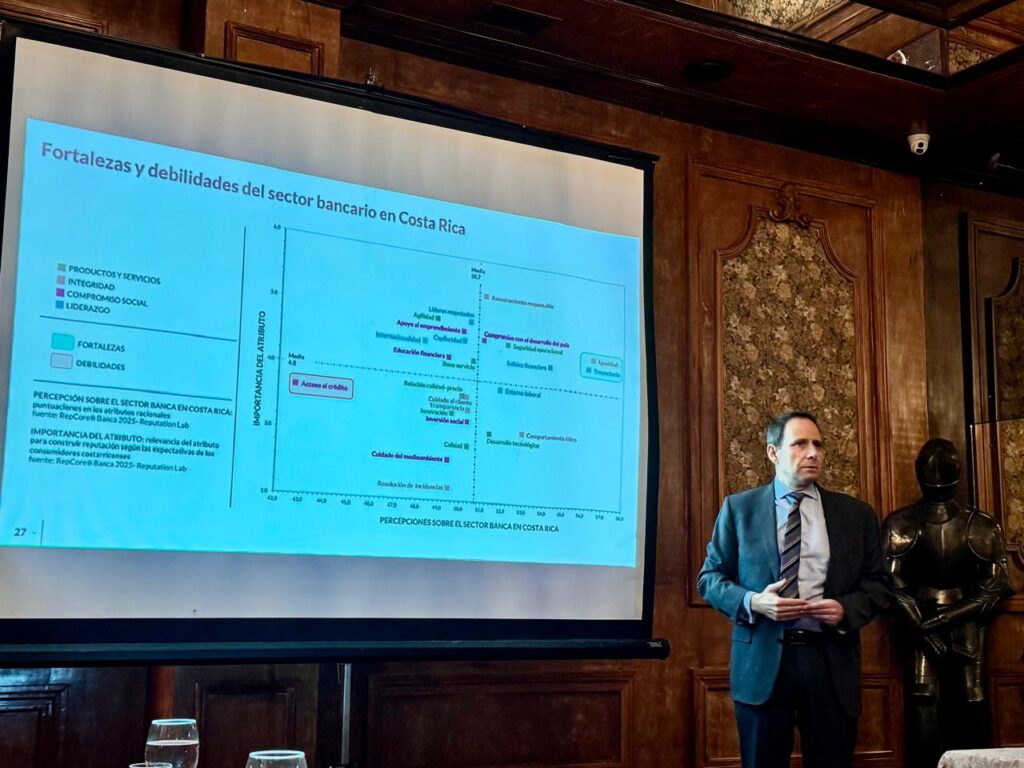
Regarding banks, Costa Rican consumers consider it especially relevant that they provide responsible advice, that they have respected leaders, that they offer an agile service, that they give more support to entrepreneurs, that they are committed to the country's development and that they guarantee security in operations.
For Fernando Prado, partner at Reputation Lab: “Although the reputation of the banking sector is weak, weighed down by a negative emotional halo, in the case of Costa Rica we see greater social support, raising it, albeit slightly, above the regional average. This shows us that the financial sector is in good health, although there is room for improvement, especially in the need to strengthen the way it deals with citizens and access to credit.
Sustainability areas, key to reputation building
According to the results of the study, variables related to ESG criteria account for almost half of the reputation of the banking sector. Specifically, the “social commitment” and “integrity” dimensions account for 46.1% of the reputation of banks, which shows that positive social impact and ethical behavior are particularly relevant for the sector.
Consumers expect banks to be more involved with the most disadvantaged and a firm commitment to supporting entrepreneurship, financial education and support for social causes. However, they do not seem to be very clear about how banks contribute to environmental protection and the fight against climate change, focusing only on anecdotal issues such as saving paper or promoting recycling. Virtually no interviewees refer to the application of environmental filters in their lending decisions, suggesting an opportunity for the sector to publicize its instrumental role as a positive agent of change in society.

